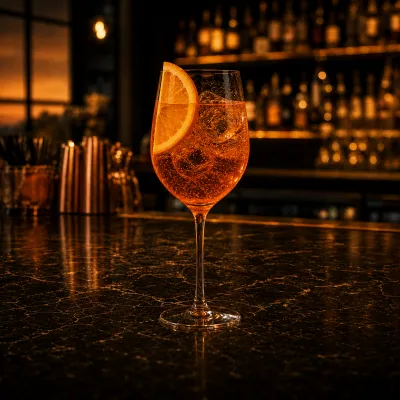
Hugo
Elderflower, mint and bubbles.
Born in South Tyrol as a lighter alternative to the Spritz, it combines prosecco, elderflower syrup, fresh mint and a dash of soda. Floral, fragrant and low in alcohol, it has become one of Europe's favourite summer aperitifs.
- Aperitif
- Built
- Glass
- Wine glass
- Method
- Built
- Strength
- Light
- Time
- 2 min
- Difficulty
- Easy
- Ice
- Cubes
Ingredients
Measures for 1 serving
-
 Mint
8 leaves
-
 Elderflower syrup
20 ml
-
 Prosecco
150 ml
-
 Soda water
top up
Garnish
- Lime slice
- Mint sprig (optional)
Proportions
How to make
- Place the mint leaves in a wine glass.
- Pour the elderflower syrup.
- Fill the glass with ice.
- Pour the well-chilled prosecco.
- Finish with a splash of soda water.
- Stir briefly.
- Garnish with a lime wheel and, if you like, a mint sprig.
The story
Origins
ProbableA plausible account, without definitive proof.
The Hugo is one of the few modern cocktails with a recognised author. According to the creator's own account, reported by Difford's Guide and the trade press, Roland 'AK' Gruber invented it in June 2005 at his San Zeno bar in Naturns, South Tyrol, looking for an alternative to the Spritz. The first version combined prosecco, soda, mint and a lemon balm syrup from a local organic farmer; lemon balm soon gave way to elderflower, as a syrup and, outside Italy, also as a liqueur. Gruber reportedly first called it 'Otto'. One Italian source gives a different attribution, to bartender Filippo DeBertl in 2001, without supporting evidence. The drink also became known in Switzerland, where Gruber later worked.
Sources (5)
- Difford's Guide — Hugo Spritz (opens in a new tab) recipe and history
- CLASS — Neo classic: the story behind the Hugo (opens in a new tab) recipe and history
- VinePair — The Story Behind The Hugo Spritz (opens in a new tab) recipe and history
- Preidlhof (Naturns) — Wie ein Naturnser zum Erfinder des Hugo wurde (opens in a new tab) recipe and history
- Dissapore — Hugo cocktail (opens in a new tab) recipe and history
Taste profile
- Bubbly
- 4 out of 5
- Fresh
- 4 out of 5
- Sweet
- 3 out of 5
- Herbal
- 3 out of 5
- Citrus
- 1 out of 5